A house renovation in Italy is more than just an architectural project. It’s an experience that combines architecture, building codes, craftsmanship, and local working methods. Anyone planning a renovation quickly realizes that the process differs significantly from what we’re used to in other countries. As an architect working in Liguria, I see that the work requires not only a design but also an understanding of the place, its history, and formal constraints. It’s a process that can surprise you—both positively and in terms of organization.
1. Preservation of historical monuments and the landscape
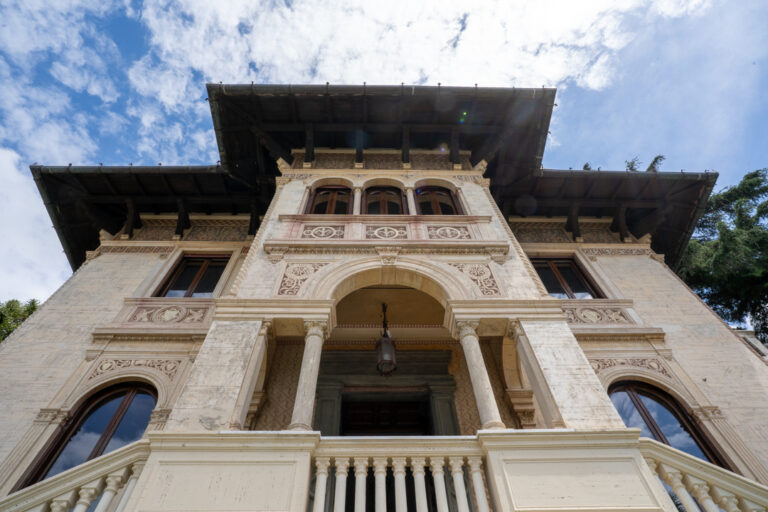
One of the key factors affecting house renovations in Italy is heritage protection and the so-called “autorizzazione paesaggistica.”
In regions such as Liguria, a large portion of the land is subject to landscape protection. This means that regulations apply not only to historic buildings, but also to:
- facades and their color schemes,
- finishing materials,
- changes to gardens and the home’s surroundings,
- and new alterations to the building’s structure.
The purpose of these regulations is to preserve architectural and landscape coherence. As a result, the region retains its character, but at the same time, design freedom is limited.
2. The speed of work and the realities of construction
A house renovation in Italy often takes longer than initially anticipated. Delays can stem from both administrative procedures and the construction work itself.
Many factors affect the timeline:
- long wait times for estimates,
administrative procedures,
the unpredictability of existing buildings,
and discoveries made during demolition work.
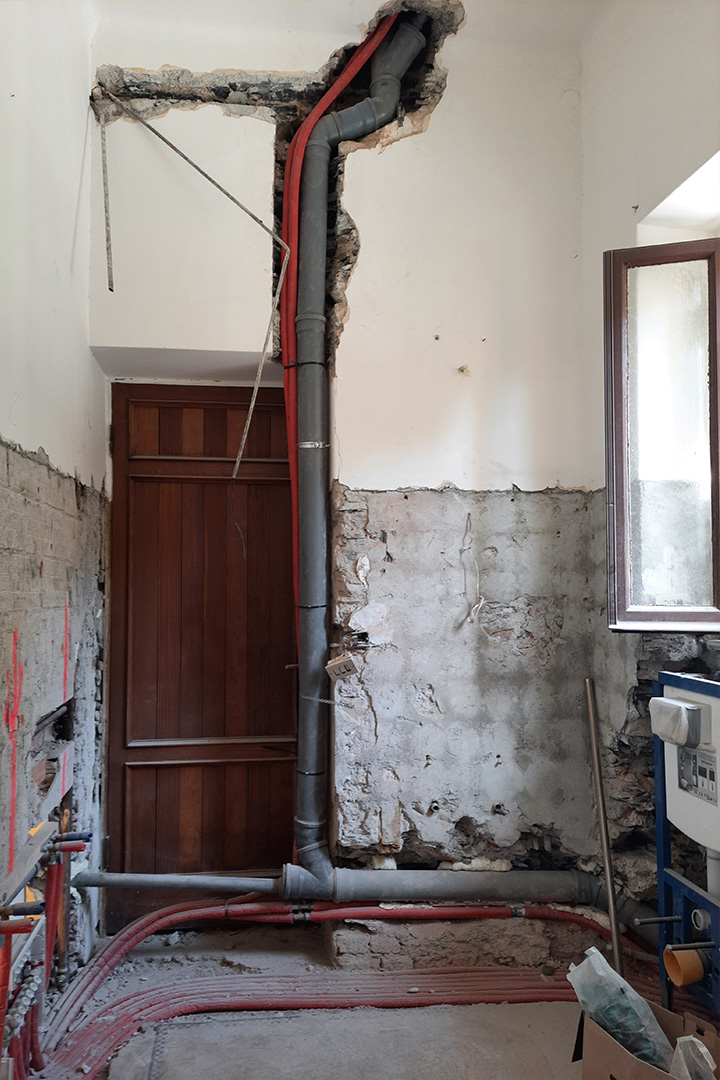
In old houses, elements often emerge that could not have been predicted beforehand—hidden structures, old installations, or changes in the building’s structure. An additional challenge is coordinating contractors. Typically, there is no single company handling the entire home renovation in Italy, so it is necessary to coordinate multiple specialists.
3. August and seasonal work
One important factor that often comes as a surprise when renovating a home in Italy is the seasonal nature of the work. August practically brings most of the construction industry to a standstill. Starting as early as mid-July, the availability of crews and materials drops significantly. Many companies close for the summer, which affects the project schedule. That’s why planning a home renovation in Italy requires taking into account the country’s overall work schedule.
4. Logistics and technical requirements
In many Italian locations, especially in historic cities, renovating a home in Italy presents logistical challenges:
- very narrow streets,
- no access by car,
- buildings without
- elevators,
- difficult access to upper floors.
In one project, it was necessary to use a crane to bring a large sheet of glass in through the balcony because the stairwell was too narrow. Situations like this are part of our daily work here.
5. Craftsmanship and quality of materials
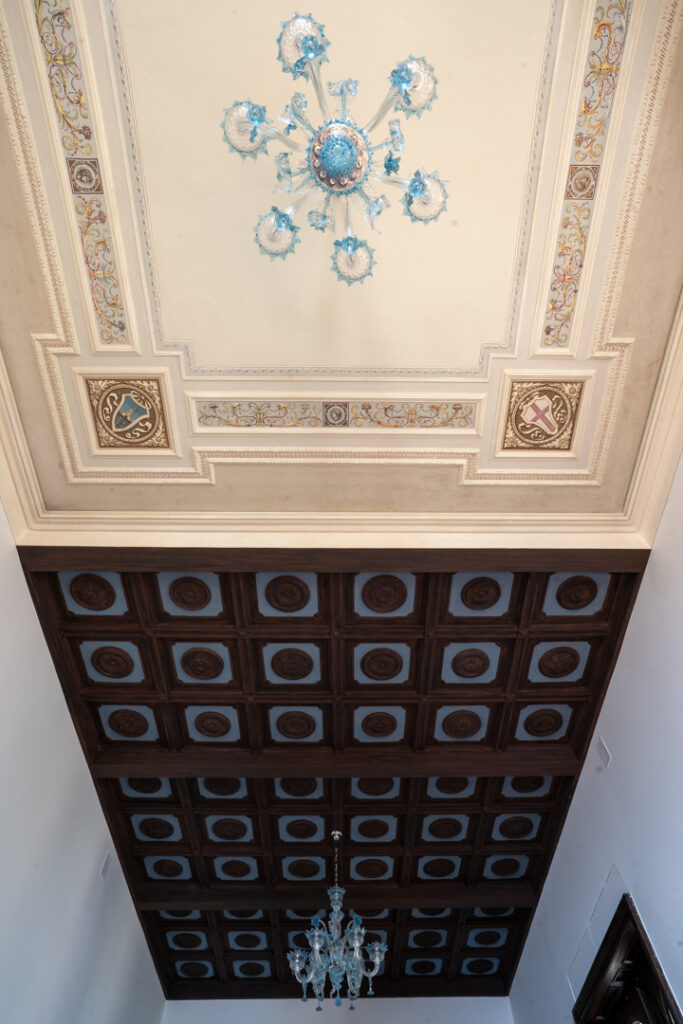
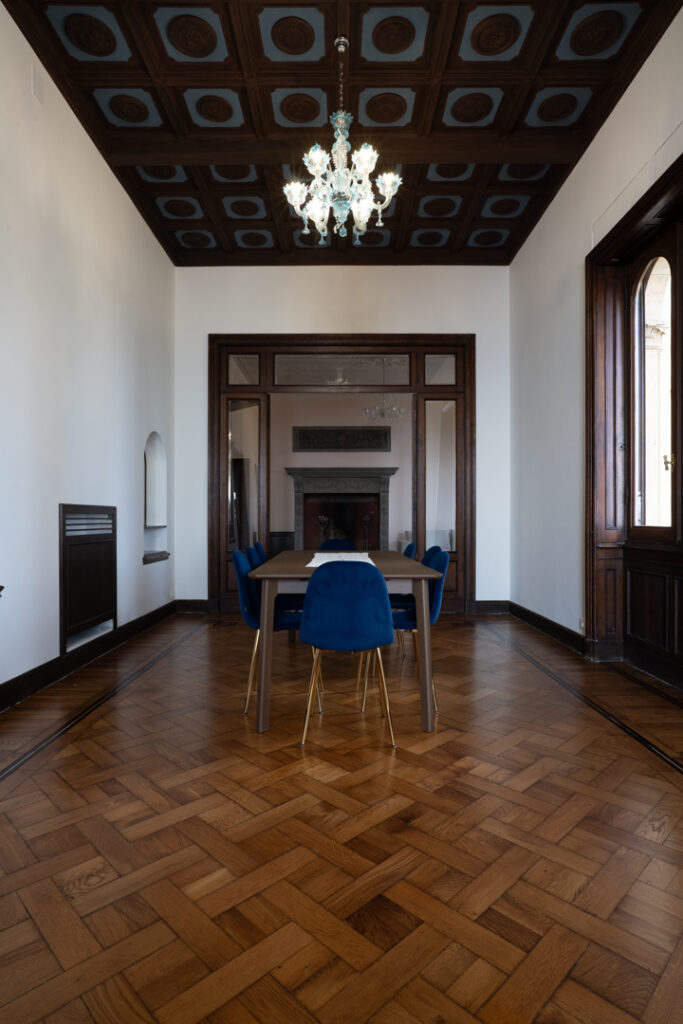
One of the greatest advantages of renovating a home in Italy is the quality of the materials and craftsmanship.
Instead of standard solutions, the following are often used:
- custom-made elements,
- traditional craftsmanship techniques,
- high-quality natural materials.
Examples include:
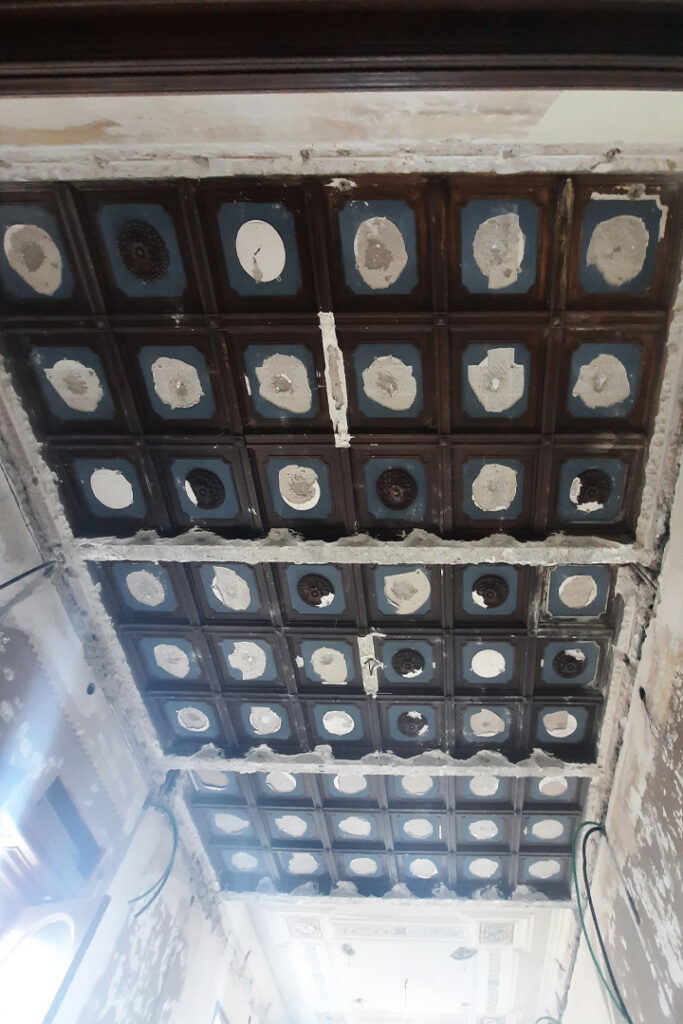
- hand-cast stucco moldings tailored to existing ceilings,
- restoration of old wallpaper while preserving the original patterns,
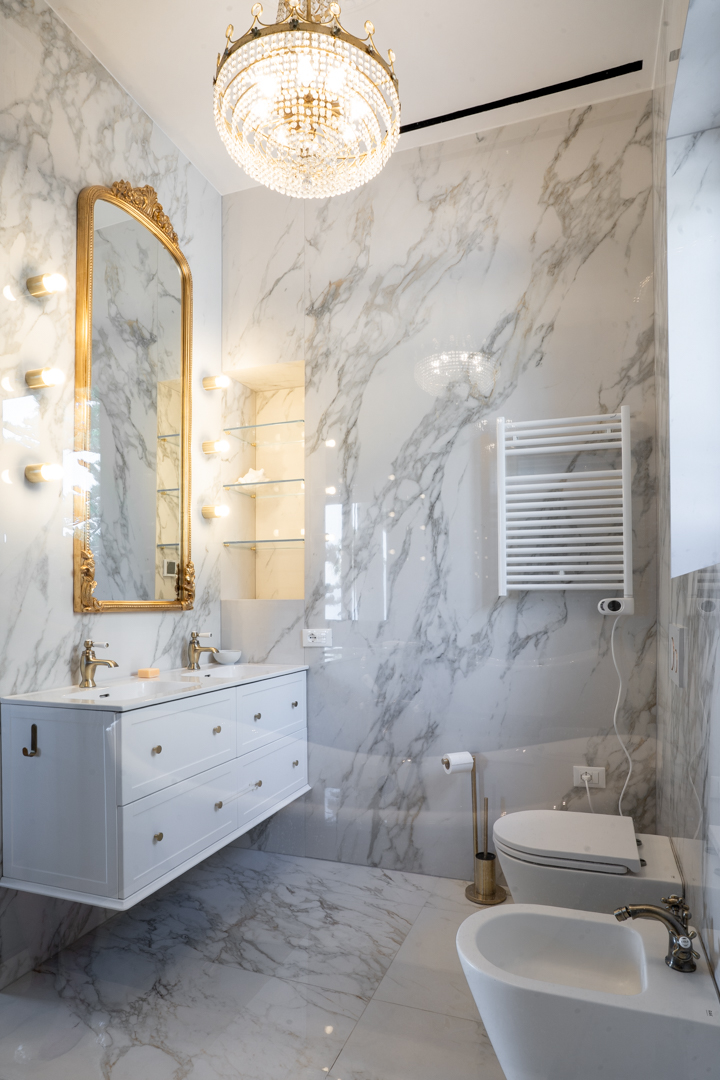
- the use of natural stone in finishes.
In Italy, quality matters more than speed of production.
Is renovating a house in Italy difficult?
Renovating a house in Italy isn’t easy, but it isn’t chaotic either—as long as you understand how it works.
It requires:
- patience,
- acceptance of local processes,
- good coordination,
and flexibility in the face of unforeseen circumstances.
It is not the “Dolce Vita,” as is often believed. Rather, it is a conscious process in which understanding the place and its limitations is what matters.
Is it worth it?
Absolutely—provided you accept the unique nature of the process. Renovating a house in Italy often leads to discoveries that change the design. These might include hidden ceilings, original architectural details, or materials that are worth (and must be) preserved rather than replaced. It is precisely these elements that give the design its unique character. One thing is paramount: a house in Italy is not an empty space—it has its own history, which you must be able to interpret and respect.